Policy Analysis
Policy is the primary determinant of how and when innovation reaches patients. Yet, it often feels abstract or reactive. By bridging the gap between the deep-dive system insights shared below and a proactive corporate strategy, I help organizations move from reactive "firefighting" to coordinated action that drives measurable business impact.
The analysis on this page forms the evidentiary core of the Policy Planning Blueprint — a methodology that ensures your policy strategy is a driver of company valuation, not just a response to the environment.
Download our policy analysis and schedule a 30-minute Strategic Alignment Diagnostic to explore how this framework can strengthen your team’s seat at the table during business planning.
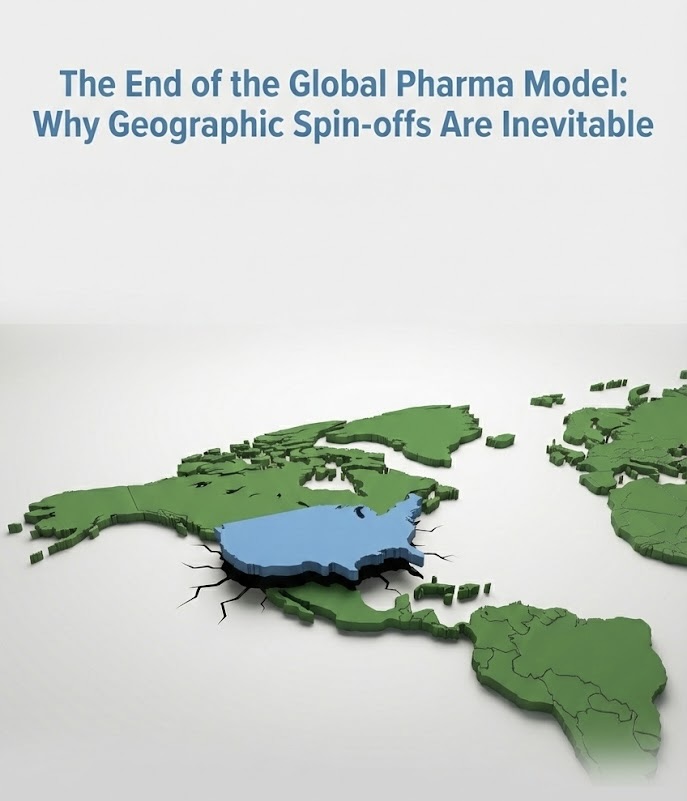
The end of the global pharma model.
How Most Favored Nation reference pricing and other regulations will radically change the industry.
The pharmaceutical industry’s unitary global business model is facing unprecedented pressure from the implementation of Most Favored Nation reference pricing in the U.S. Simultaneously, the Inflation Reduction Act’s "Pill Penalty" and the "Orphan Loophole" introduced with the One Big Beautiful Bill Act are triggering a radical review of R&D pipelines.
While the industry is still exploring tactical defenses, this analysis argues that these pressures ultimately lead to one unavoidable conclusion: geographic spin-offs. Just as the industry previously separated innovative pharma from off-patent portfolios and consumer health, the next wave of value creation will require separating high-value U.S. assets from price-controlled international portfolios.
The unintended deadlock.
How industry and regulators are stranding global patients.
Having previously reviewed the impact of U.S. and EU policy on the pharmaceutical industry, this analysis assesses the human cost of the unintended regulatory deadlock.
U.S. MFN pricing is forcing strategic launch delays and the "pill penalty" is devaluing shelf-stable oral treatments that are the backbone of global health. As pipelines pivots toward complex biologics and genetic stratification, a new "precision barrier" is rising for any system lacking the necessary diagnostic infrastructure.
As traditional biopharma becomes more U.S.-centric, new innovation hubs in China and India will likely arise to provide a competitive counterweight for those stranded by Western regulatory blind spots.

The Sovereign Health Fund.
Building a firewall against wealth extraction.
Most-favored-nation (MFN) deals signed by major pharmaceutical companies with the U.S. government explicitly foresee the repatriation of increased foreign revenues “to lower drug prices for American patients and taxpayers”. For international health systems, this means higher net prices would effectively subsidize U.S. healthcare and private investors.
The Sovereign Health Fund is the strategic architecture designed to stop this wealth transfer. It guarantees MFN-aligned prices, secures patient access to innovative treatments, but redistributes revenues to healthcare systems of participating countries.